We are excited to share with you the latest blog by Dafydd Wyn Morgan of Serydda, learn what to look out for in the night sky over the next few months of Autumn. Written by Dafydd Wyn Morgan.
An Astro Autumn in Cymru fach!
The Night Sky Above Wales This Autumn
August to November 2026
There is something wonderfully different about Wales after dark. Leave the towns and cities behind, find a quiet rural retreat, and the night sky becomes part of the experience.
🌌 The Milky Way — rising above you
August and September are particularly rewarding months for seeing the Milky Way. From genuinely dark locations in Wales, the great band of our home galaxy can stretch dramatically across the sky.
Look towards the south and you’ll find the richer, brighter regions of the Milky Way around Sagittarius and Scorpius. Follow it upwards and you’ll encounter Aquila, Cygnus and Lyra, creating one of the most spectacular regions of the summer and early autumn sky.
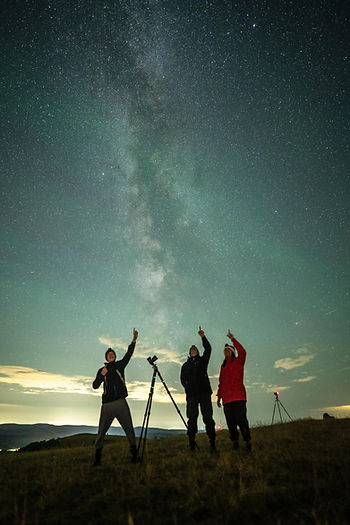
As autumn progresses, the Milky Way can appear almost vertical in the night sky, creating an incredible backdrop for photography and simply standing beneath it and looking upwards.
And don’t forget to look for some of the stars that make these constellations so recognisable — Vega, Deneb and Altair, forming the famous Summer Triangle, together with bright Arcturus, Capella and the stars of Cassiopeia.
⭐ September — galaxies, clusters and dark skies
September is a fantastic time to explore the autumn constellations. Andromeda, Pegasus, Cassiopeia and Perseus become increasingly prominent, with the famous Andromeda Galaxy (M31) providing a wonderful target for binoculars, telescopes and smart telescopes.
From a dark Welsh location, Andromeda can even be glimpsed with the naked eye as a faint, misty patch of light — remember that you are looking at another galaxy containing hundreds of billions of stars.
☄️ October — meteor season arrives
October brings the Draconid and Orionid meteor showers.
The Draconids reach their peak around 8–9 October, although they are usually a relatively modest shower.
The real autumn highlight is the Orionids, associated with the famous Halley’s Comet, which peak around 21 October. They produce fast, bright meteors and can be particularly rewarding from a dark rural location.
October is also a great month to look for Orion, Taurus and the Pleiades, which become increasingly prominent as the nights get longer.
🍂 November — Orion returns
By November, the unmistakable shape of Orion the Hunter is rising prominently in the evening sky.
Look for his three distinctive belt stars and then explore the surrounding constellations of Taurus, Gemini and Auriga. The Pleiades star cluster is another beautiful naked-eye and binocular target.
November also brings the Leonid meteor shower, along with the continuing activity of the Taurids. The Leonids are associated with Comet Tempel-Tuttle and traditionally peak around the middle of November.
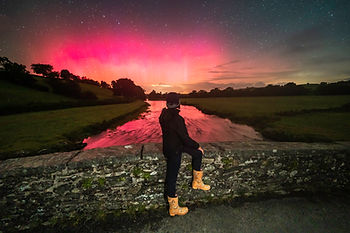
💚 And what about the Northern Lights?
Yes — the Aurora Borealis can sometimes be seen from Wales.
There are never any guarantees. The aurora depends upon solar activity, geomagnetic storms, darkness and clear skies, but during periods of strong solar activity the Northern Lights can become visible much further south than their usual Arctic home.
That means a clear autumn night in a dark Welsh location could potentially deliver a very special bonus: the Milky Way overhead and the Northern Lights dancing on the northern horizon.
BOOK YOUR ASTRO ADVENTURE WHILE STAYING AT LON LODGES. CHOOSE FROM THE ASTRO EXPERIENCES ON OUR STARGAZING PAGE. IT WILL BE AN EXPERIENCE OF A LIFETIME!

 Kerena and Stephen Pugh
 Mobile: 07929 539874
 Lôn Farm, Nantmel, Rhayader Powys LD6 5PE